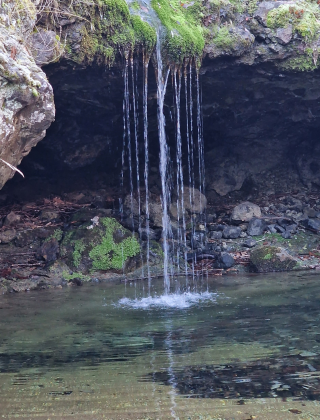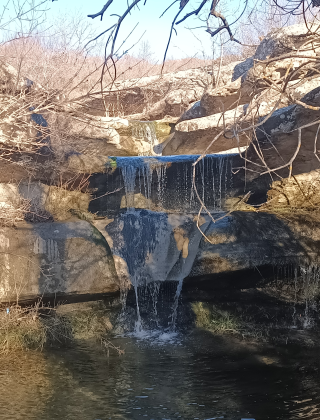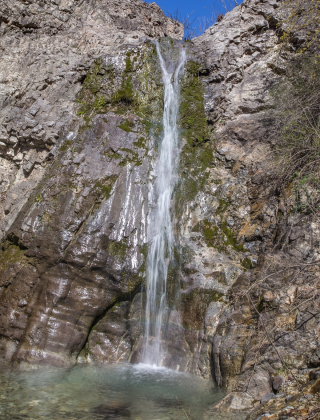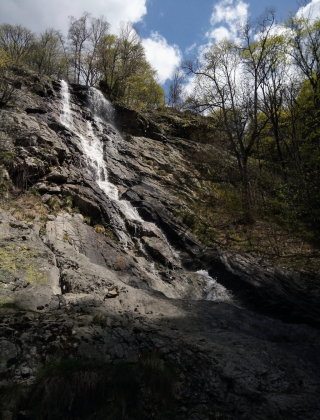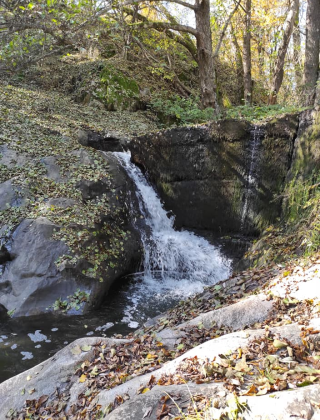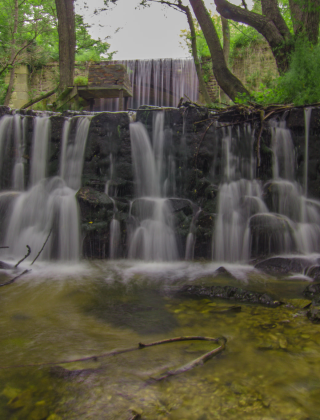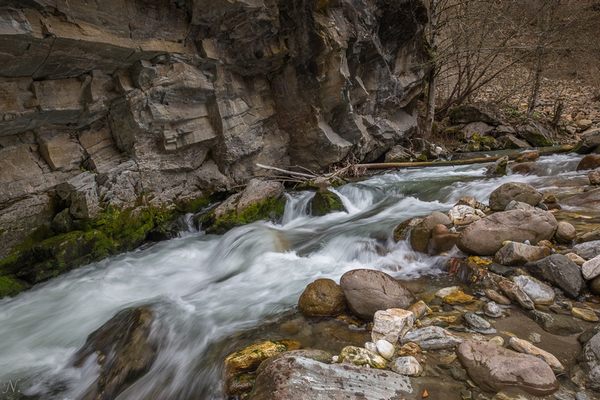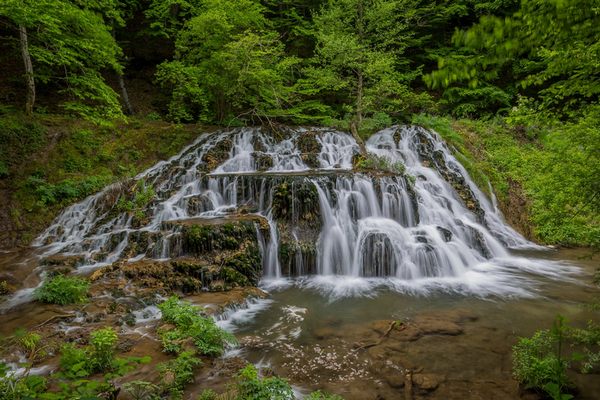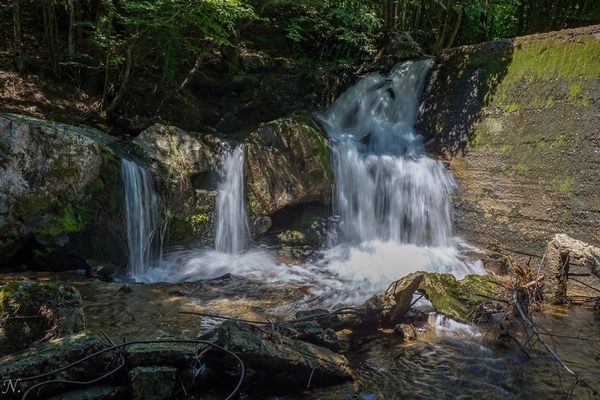
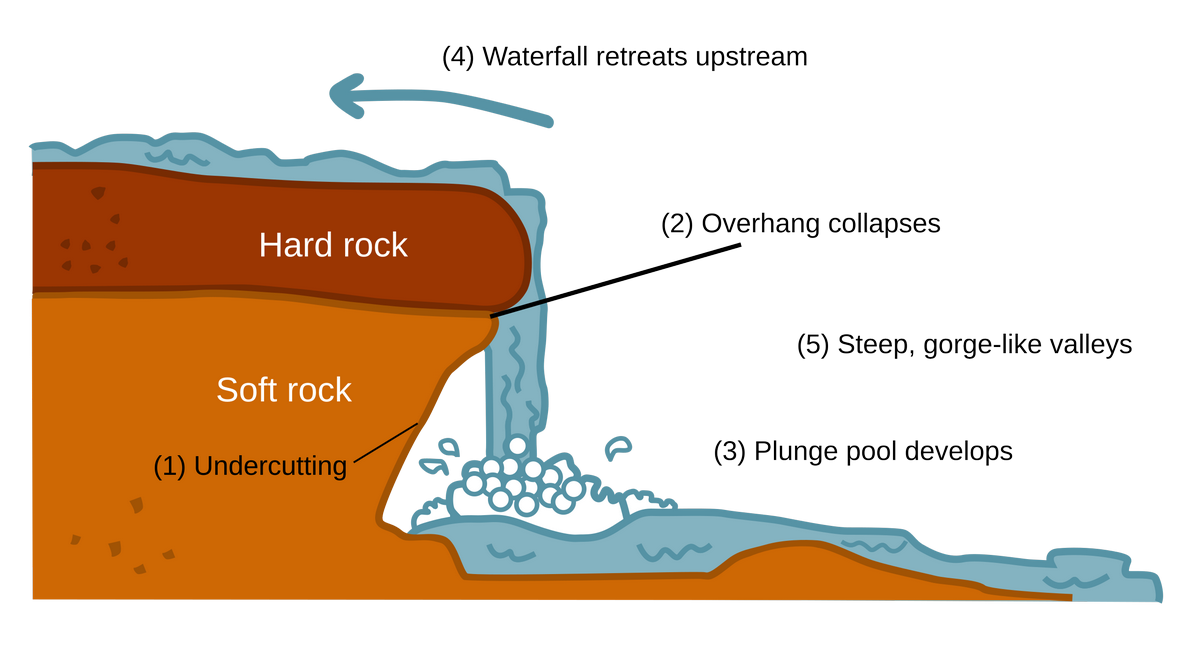
*The image is sourced from https://en.wikipedia.org/wiki/Waterfall
In our open database of Bulgarian waterfalls, we adopt several practical rules to classify a natural formation as a waterfall:
• Depending on the height:
- A water drop of 2 meters or more is clasified as a waterfall.
We regard this minimum height as sufficient to clearly distinguish a waterfall from rapids and low cascades, ensuring it stands out as a distinct natural formation with an independent vertical drop. At this height, the water drop is also visually comparable to human stature. A prime example is the Sapdere (Marfche) Waterfall 6, which features a height of exactly 2 meters.

- A water drop with a height of less than 2 meters is classified as a ledge waterfall (simply ledge) or rapids;
Contradiction: In the public space, several landmarks are widely promoted as waterfalls—such as the Kazaneto Waterfall (Starozagorski Mineral Baths), the Sitovo Waterfall, and the Kazankite Waterfall (Sakar Mountain), among others. However, according to our established criteria, these geographical features actually have height of less than 2 meters and fall into the category of ledges.
Kazaneto Ledge (Kazaneto Waterfall)

Dormushevska Reka Ledge (Sitovo Waterfall)

Kazankite Ledge (Kazankite Waterfall)

• Depending on the continuity of the water flow:
- Single Waterfall – represents the generally accepted understanding of a waterfall, where the water flow remains continuous as it drops or slides from the crest to the base at an incline greater than 30 degrees. (The flow may drop completely vertically or maintain partial contact with the bedrock).
- Tiered Waterfall – is composed of several drops, between which the fall or slide of the water is interrupted. The primary condition is that the sections separating these drops must consist of either a plunge pool or solid bedrock. These intermediate sections may have an incline of less than 30 degrees, but their length should not exceed the average height of the drops.
Plochite Waterfall

- Cascade – is composed of several drops, between which the fall or slide of the water is interrupted. Unlike a tiered waterfall, the sections separating these drops do not necessarily have to consist of a plunge pool or solid bedrock; that is, they may contain accumulated alluvial material (soil, sand, gravel, river stones, boulders, etc.). These intermediate sections may have an incline of less than 30 degrees, but their length should not exceed the average height of the drops.
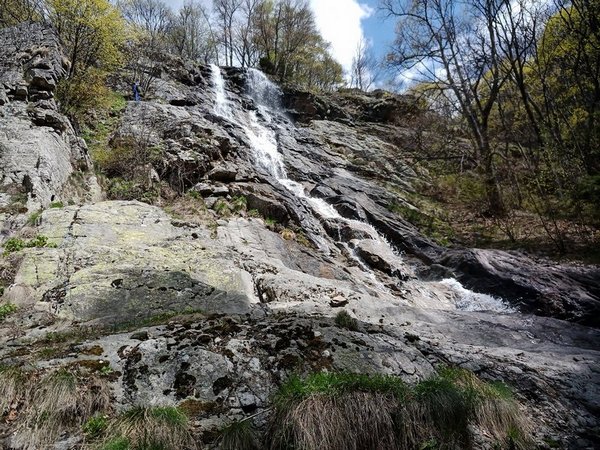
Golyam Ustinski Waterfall
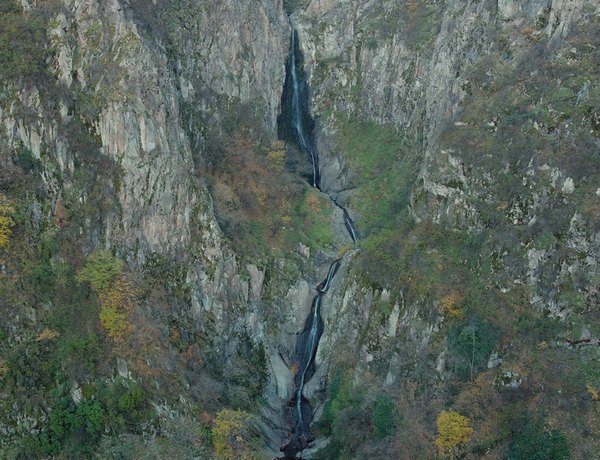
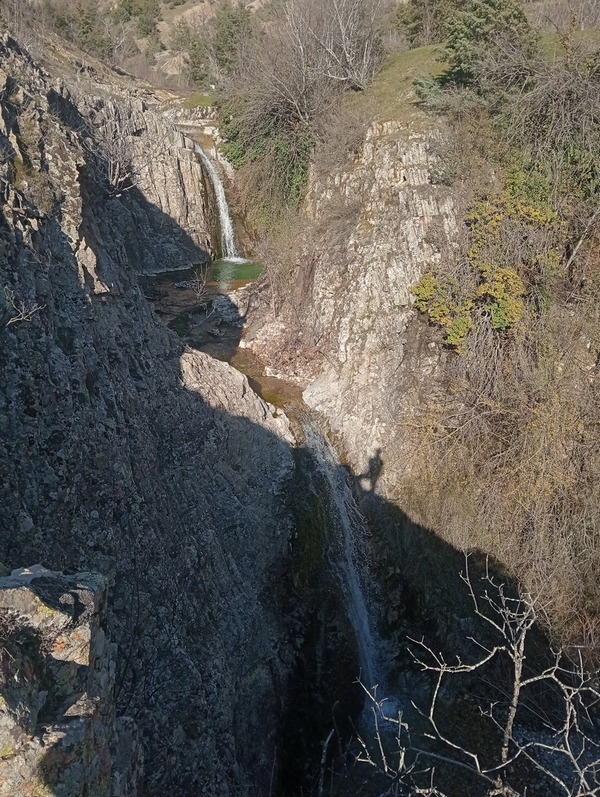
A good example is the two waterfalls near the village of Samovila (Krumovgrad Municipality) shown in the picture, where the distance between the two drops exceeds their average height; therefore, they should be classified as two distinct waterfalls.
• Depending on the incline:
• Depending on the duration of the discharge continuity:
- A waterway that meets the criteria mentioned above is recognized as a waterfall if water flows through it periodically, for at least a few days a year, as a result of regularly recurring natural precipitation or snowmelt. This category also includes numerous mountain chutes and "slides," provided they meet the minimum incline requirements
- A waterway is not recognized as a waterfall if water flows through it only as a one-off or accidental event resulting from anomalous natural precipitation or sudden snowmelt.
• Depending on human intervention:
Certain features are already widely known to the public as waterfalls—such as the Madzharovski (Gyurgensko Dere) Waterfall (formed by an embankment), Cherganovo Waterfall (formed by a weir), and Lokorsko Waterfalls (formed by check dams), among others. However, according to our established criteria, these fall under the category of Artificial Waterfalls.
Madzharovski (Gyurgensko Dere) Waterfall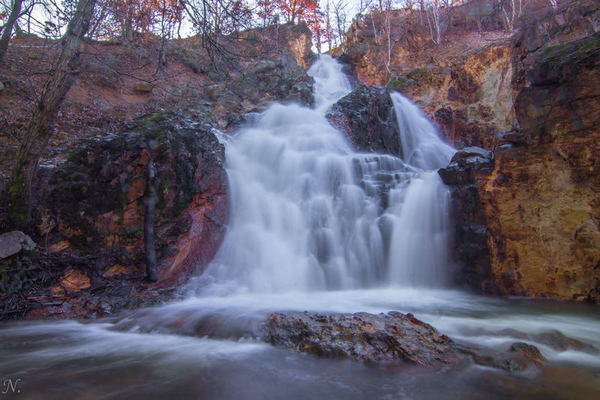
Cherganovo Waterfall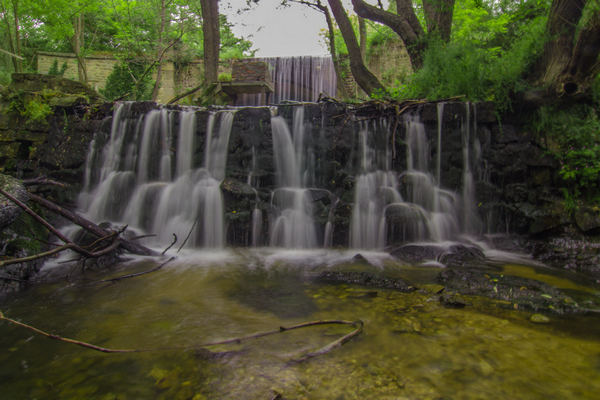
Lokorsko Waterfalls