Most waterfall enthusiasts are not looking for dry scientific data and complex indicators. For them, it is more important to understand characteristics that are easy to digest.
Bulgaria is a small mountainous country with thousands of short rivers and small associated watersheds. As a result, the seasonality of water flow is highly pronounced. Over the past 30 years, we have observed prolonged periods of drought. Even waterfalls traditionally considered to be perennial now experience periods of minimal surface flow, and the trend toward partial or total drying during the summer months is intensifying. An additional impact comes from the numerous water catchments along mountain rivers, which alter the natural flow regime and, consequently, the characteristics of the waterfalls.
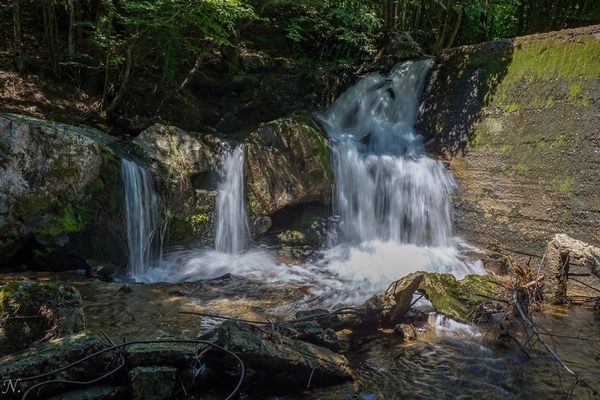
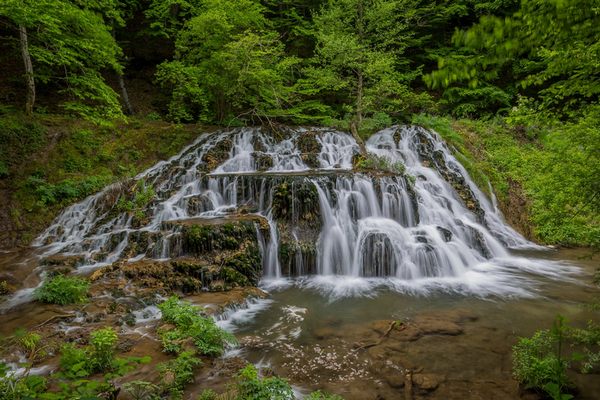
Due to these unique characteristics, it is not appropriate to compare our waterfalls with global standards for high water volume. Therefore, from a practical standpoint, we have chosen a classification of three main types of waterfall volume that are characteristic of the Bulgarian landscape throughout most of the year:
- High-flow – up to 30–50 l/s and above;
Note: What does an AI say when asked, "What does 30 liters of water per second look like?"
A flow rate of 30 liters per second (30 l/s) is substantial. It represents 30 cubic decimeters of water passing by every single second—equivalent to about 20 large (1.5-liter) bottles of mineral water being poured out every second, or roughly 100 times more than an average household faucet running at full blast.
What this means in numbers:
Time: In one minute, this equals 1,800 liters (30 x 60).
Volume: In one hour, it reaches 108,000 liters (1,800 x 60).
Comparison: Imagine 20 full 1.5-liter bottles of water emptying out every single second. It is a very fast-moving flow.
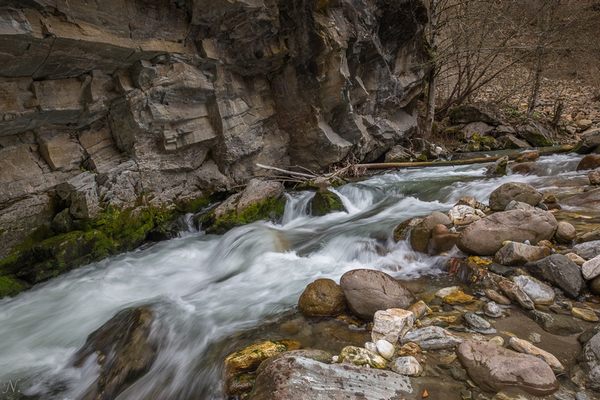
Where it is found: In nature, this is comparable to a small mountain stream or creek rushing quickly downstream.
This flow rate is significant because it measures water volume over time, rather than a static amount.
- Low-flow – up to 30–50 l/s;
- Ephemeral – Short-lived;
Note: Present only under specific weather conditions and for a short period of time; at its peak, it can even become high-volume. Usually, for most of the year, there is no visible surface flow, and it can be considered a "dry" waterfall.